
Custom pool builder in Lakeway, Texas.
Lakeway reviews every pool permit itself, in 12 to 15 days, and counts your slope before it counts your deck.
Lots, soil and terrain in Lakeway.
The City of Lakeway's Building & Development Services issues pool permits through the Civic Self Service portal. Minimum review is 12 to 15 days for a new submittal and 5 to 7 for a re-exam. The application must show that the plans went to the subdivision's Architectural Control Board first and, on a septic lot, the LCRA receipt for the septic submittal. Lakeway's own rules go beyond the 2021 pool code: aboveground pools are prohibited, an apron more than 30 inches above grade needs a 42-inch railing, and exterior lighting is fully shielded and under 3,000 K. The View Protection overlay covers roughly 3,500 lots.
Lakeway sits on Glen Rose limestone with Brackett soils reaching bedrock at 5 to 20 inches, so excavation is hammer and saw work. The code section on blasting is titled “prohibited.” Impervious cover is 50 percent of net site area, but the net is slope-weighted: ground between 15 and 25 percent slope counts 40 percent, 25 to 35 percent counts 20 percent, and steeper ground is excluded. Cut and fill are capped at 6 feet. Rough Hollow is lake-view hillside and estate lots; The Hills is gated golf ground with a 25-foot side and rear setback on course lots; Serene Hills is high ridge; Old Lakeway is 1970s to 1990s homes on large treed lots.
Old Lakeway and The Hills are where we renovate: pools from the 1970s to the 2000s. Rough Hollow and Serene Hills are new builds on slopes: a vanishing edge toward Lake Travis, a multi-level deck within the 6-foot cut limit, and pavilions kept low enough not to draw a view-protection complaint. The city put a moratorium on new pool permits in the 2014 drought, so the fill and auto-fill are designed around the provider's restriction stages.
- PermitsCity of Lakeway Building & Development Services via Civic Self Service; ACB proof required
- ReviewMinimum 12–15 days new, 5–7 days re-exam; permits expire after 18 months
- Impervious cover50% of net site area, slope-weighted; steep ground counts less or not at all
- GroundBrackett soils over Glen Rose limestone at 5–20″; blasting prohibited
- LightingDark-sky friendly: fully shielded, under 3,000 K
- WaterLakeway MUD (absorbing the Rough Hollow MUDs in 2026); Hurst Creek MUD; WCID 17
Neighborhoods we work in
- Rough Hollow · lake-view hillside and estate lots, marina
- The Hills of Lakeway · gated golf-course lots, 72 holes
- Flintrock Falls · golf-course and hillside lots
- Serene Hills · high ridge and greenbelt, 2015-onward builds
- Costa Bella · gated lakefront estates with docks
- Lakeway Highlands · hillside lots in the Rough Hollow MUD area
- Old Lakeway · large treed lots, 1970s–90s homes, lake views
Custom pools we have built in Lakeway.
No completed Lakeway project is on the site yet; these three, in neighbouring Bee Cave and Steiner Ranch, sit on the same Glen Rose ridges.

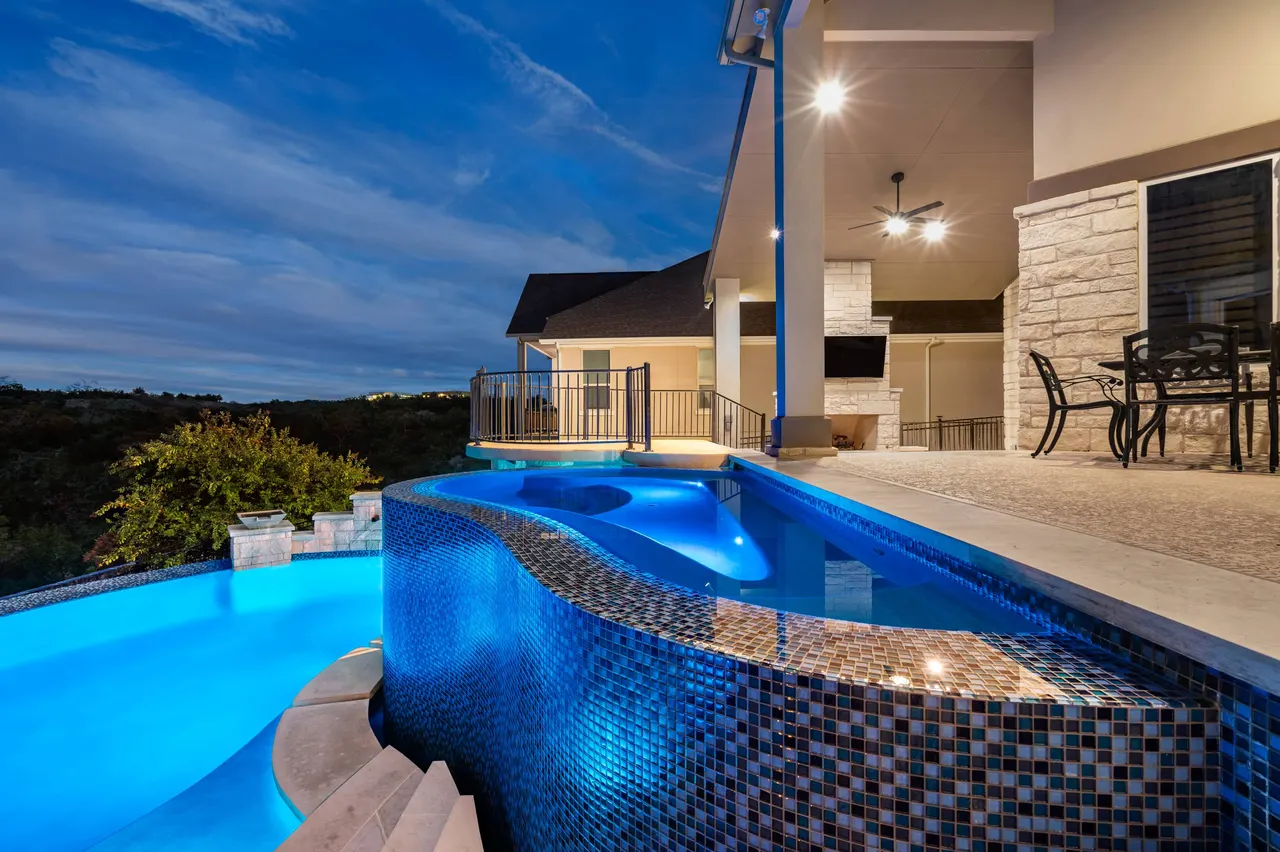
Cliffside Overflow
Ridge edge with nothing behind it → perimeter-overflow pool and raised glass-tile spa on the drop.
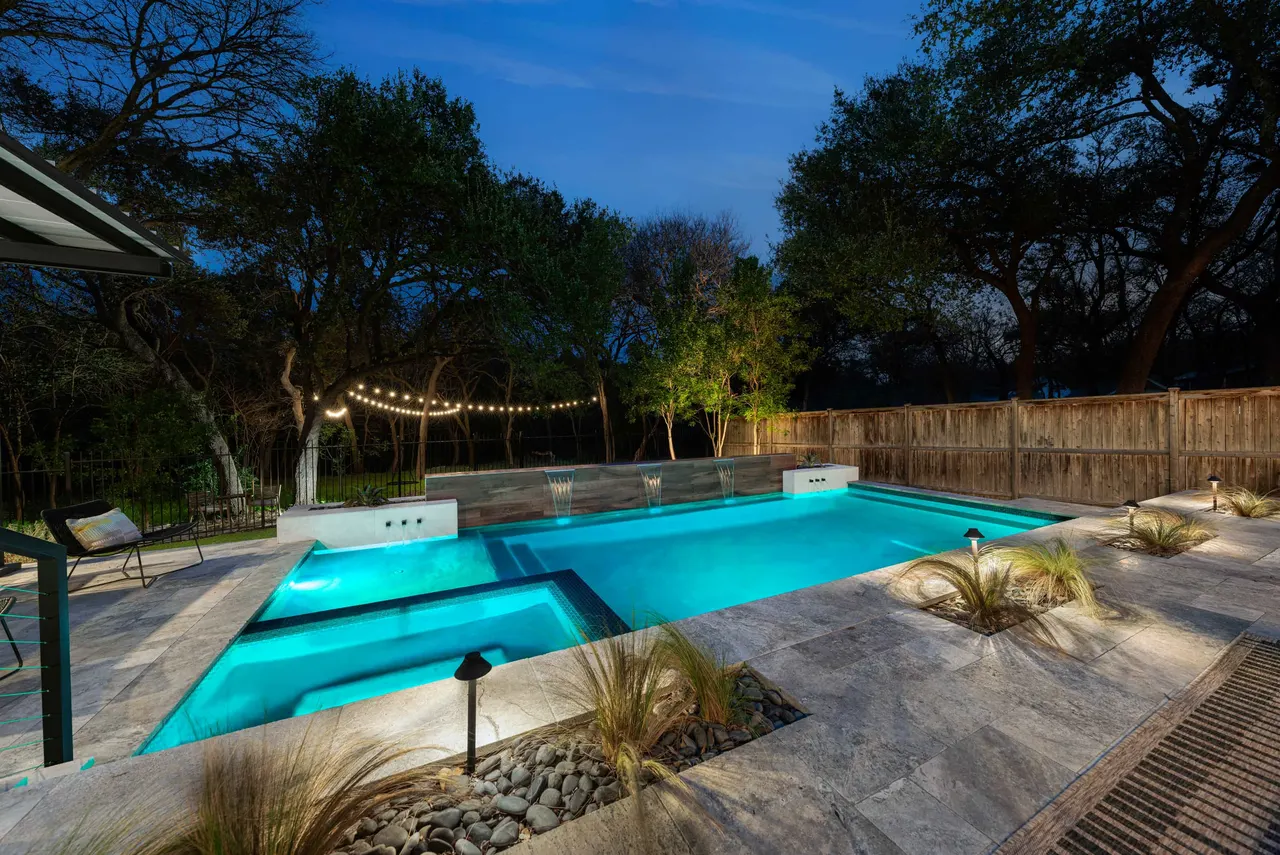
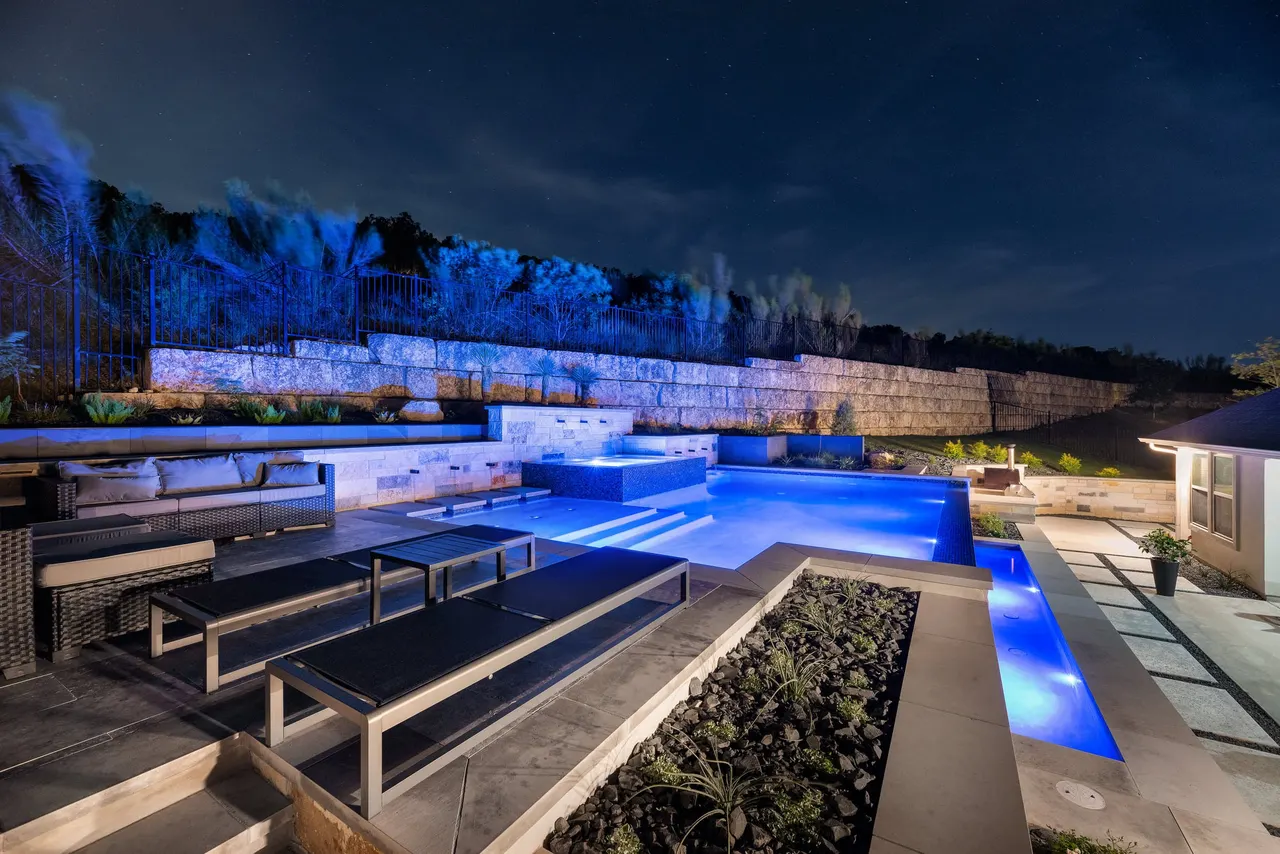
Woodland Geometric
Mature oaks across the yard → geometric pool and raised spa fitted between the trunks, wood-look porcelain wall.
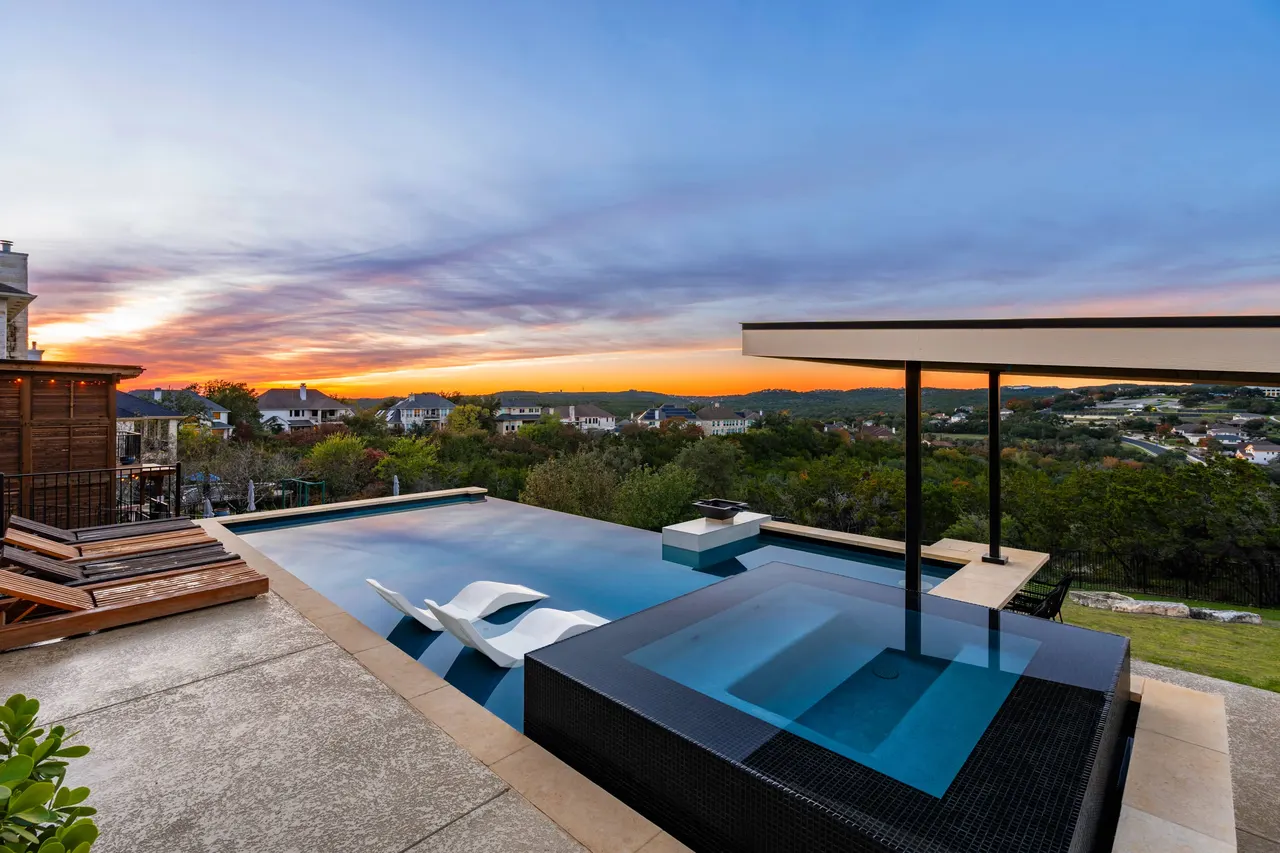
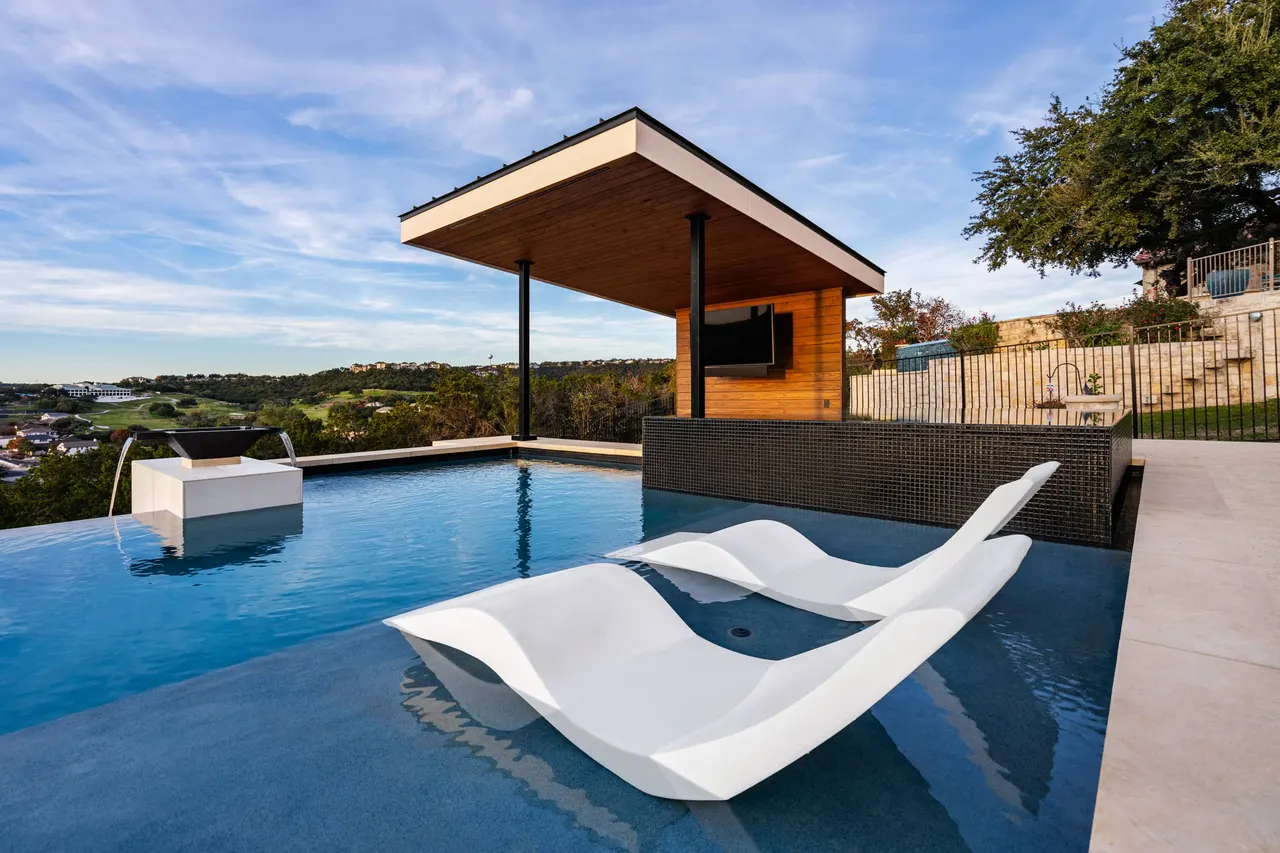
Sunset Perch
West-facing hilltop in full sun → raised vanishing-edge pool with a cantilevered cabana over the view.
Pool builders for nearby communities.
The pages for the communities around Lakeway: Bee Cave, our office, Dark Sky city; Lake Travis, five permit offices; Spicewood, wells and two counties; West Lake Hills, 25 percent cover cap.
Questions about Lakeway.
The City of Lakeway Building & Development Services issues it through the Civic Self Service portal. Minimum review is 12 to 15 days, re-exams 5 to 7. Before you file, the plans go to your subdivision’s Architectural Control Board and, on septic, to the LCRA, because the city wants both receipts in the application. The $10,000 permit bond and the city’s insurance certificate are on the contractor, not you.
Two things. The ground is Glen Rose limestone at 5 to 20 inches, so the dig is rock and blasting is prohibited. And the impervious-cover limit is slope-weighted: steep ground counts less or not at all toward your 50 percent, so a hillside lot in Rough Hollow or Serene Hills has less deck allowance than its size suggests. Retaining walls over 4 feet and any apron more than 30 inches above grade add engineering and railings.
Projects start around $250,000; most run $300,000 to $600,000. In Lakeway the money goes into rock excavation, engineered retaining walls on the slope, a 42-inch railing where the apron rises above 30 inches, dark-sky fixtures, ACB submittals in The Hills or Rough Hollow, and keeping structures low under the View Protection overlay. Golf-course lots in The Hills carry a 25-foot side and rear setback that can shrink the footprint.
Six to nine months is the base. Lakeway adds the ACB review before the city will take the application, a 12-to-15-day minimum review plus re-exams, a separate plumbing permit from Lakeway MUD or WCID 17, and the slower pace of rock excavation. Permits expire 18 months after issue, which is only a problem if the design changes mid-build.